

What If I Don’t Know What to Talk About in Therapy?

Have you ever sat down for a therapy session...and quickly realized you have no idea what to talk about?
Maybe you had plenty on your mind earlier in the week, but now it’s all disappeared.
Or maybe you know something feels off, but you’re not sure how to put it into words.
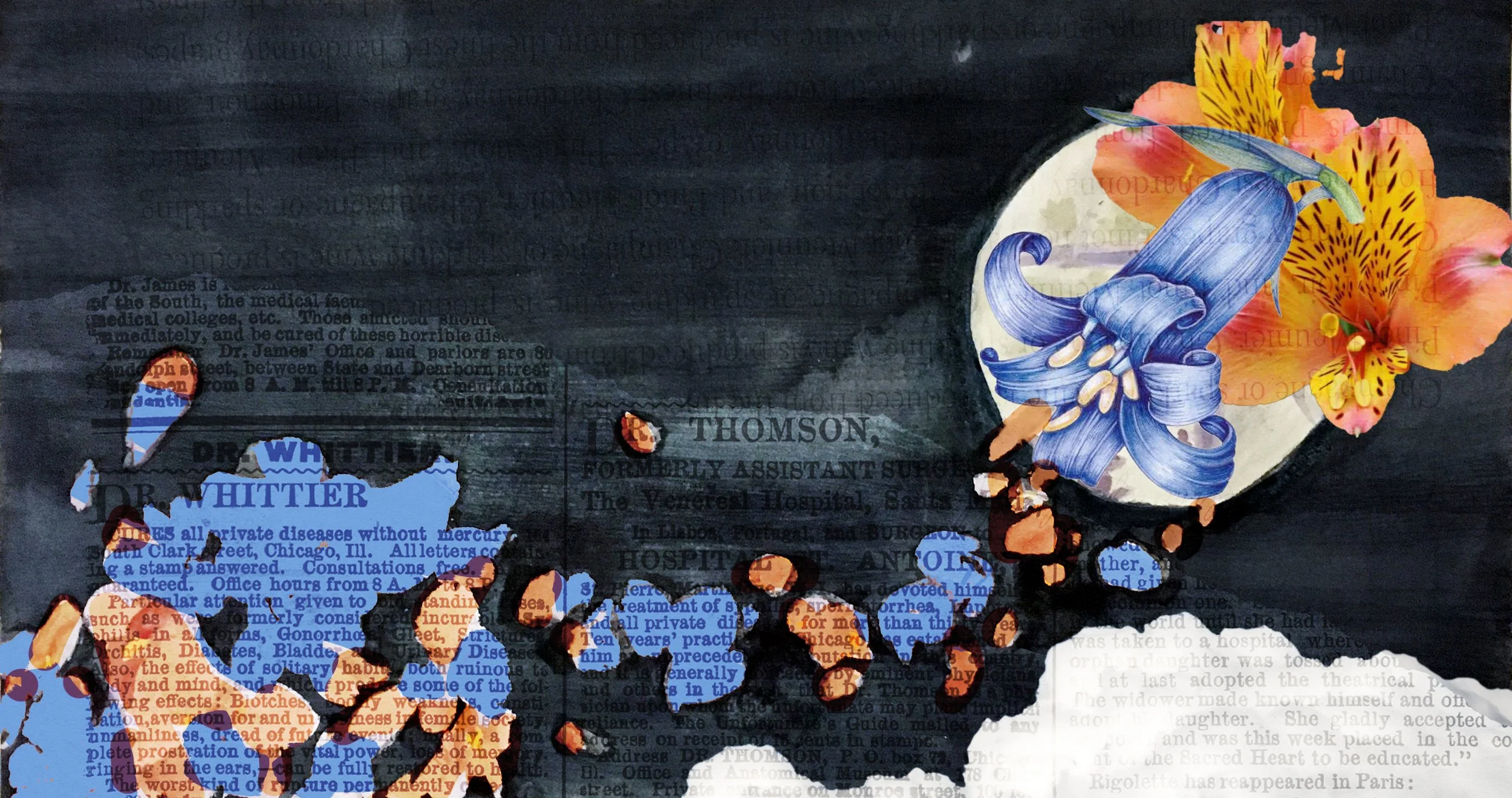
(Image credit to kepdesigns)
You don’t need to show up to therapy with an agenda, a perfectly organized list of concerns, or even a clear understanding of how you’re feeling. Figuring out where to start can be part of the therapeutic process—and there are plenty of ways to communicate and explore what’s going on besides simply talking.
In this article, we’ll look at what happens when you don’t know what to talk about in therapy, ways you and your therapist can find a starting point together, and alternatives for when words just aren’t working.
Do I Need to Prepare for a Therapy Session?
Nope! It’s completely normal and okay to show up without an itinerary. One of the benefits of meeting with a licensed therapist is that they are trained in guiding sessions. They can ask questions, revisit things you’ve talked about before, or help you find a place to start.
That said, some people find a little preparation helpful. You might jot down something that happened during the week, a feeling you keep noticing, part of a conversation you want to process, or a question you want to explore. If you tend to forget what you wanted to discuss once the session starts, keeping a note on your phone or a running list between sessions can make it easier to remember.
There’s no “right” amount of preparation. You can arrive with a detailed list one week and absolutely no idea what to talk about the next. Both are perfectly workable starting points for therapy.
What Happens If I Have Nothing to Say in Therapy?
Sometimes your mind just goes blank.
A therapist can help take some of the pressure off by asking questions, checking in about your week, returning to something you discussed in a previous session, or offering a more structured activity.
You also don't have to fill every moment of silence. A pause can give you time to notice what you're thinking or feeling without immediately needing to turn it into a polished explanation. Therapy can be a place where it’s perfectly ok to be unpolished, unfiltered, and raw.
If you regularly find yourself unsure what to talk about, that's something you can tell your therapist, too. You might discover that you prefer more questions or structure during sessions. Or you may need more time to process a question before responding.
Therapy can be adjusted around how you communicate best rather than expecting you to become good at one particular style of conversation.
What If I Know Something Is Wrong, but I Can’t Explain How I Feel?
You don't have to know exactly what you're feeling before you can talk about it in therapy.
Sometimes the starting point really is, “I don't know. Something just feels wrong.”
Instead of immediately trying to find the right emotion word, you and your therapist might explore other pieces of the experience. What have you noticed in your body? Has your energy changed? Are you avoiding something you normally enjoy? Is there a thought you keep returning to? Did something happen recently that has stuck with you?
You can also use comparisons, metaphors, images, music, sounds, gestures, or art to communicate an experience that is difficult to explain directly.
For some people—especially those who process experiences visually, creatively, or more slowly than a back-and-forth conversation allows—having alternatives to verbal communication can make therapy more accessible.
The goal isn't to produce the “correct” description of what you're feeling. You and your therapist can be curious about it together.
Can I Bring Notes or a List to Therapy?
Absolutely. If writing things down helps you organize your thoughts or remember what you wanted to discuss, you can bring notes to therapy.
Your notes don't need to be formal. You might keep a running list on your phone, write in a journal, save a text you want to talk about, or jot down a few words when something happens during the week.
You also don't have to discuss everything on your list. Think of it as a collection of possible starting points rather than a checklist you have to finish before the session ends.
Writing can be especially helpful if you find it easier to organize your thoughts when you have time to process them on your own.
What If I Forget Everything I Wanted to Talk About Once Therapy Starts?
This happens more often than you might think.
You may spend the week thinking, “I definitely need to talk about this in therapy,” only to sit down for your appointment and suddenly remember none of it.
Keeping a note between sessions can help, but your therapist can also help you retrace your steps. You might think about what has taken up the most mental energy that week, whether anything felt particularly difficult or surprisingly good, or what you were thinking about immediately before your appointment.
And sometimes the thing you planned to discuss isn't what you end up needing that day. That's okay too. Therapy doesn't have to follow a predetermined plan.
Does Therapy Have to Be Mostly Talking?
Talking is one way to participate in therapy, but it doesn't have to be the only one.
As an art therapist, I sometimes use drawing, painting, collage, writing, digital art, or other forms of creative expression with clients. Art can give us something concrete to respond to when answering an open-ended question like “How are you feeling?” feels overwhelming or impossible.
You might choose colors that represent your week, draw what an emotion feels like, make a collage about something you're trying to understand, or simply experiment with materials and notice what comes up.
You don't need to be artistic, and you don't have to know what your artwork means before you make it. We can explore it together.
Art therapy is also optional. Some clients use art frequently, others use it occasionally, and some sessions may involve no art at all.
[Learn more about art therapy →]
What If I Need More Structure From My Therapist?
It's okay to want your therapist to provide more direction.
Some people enjoy beginning a session with an open-ended question and deciding where the conversation goes from there. Other people find that much freedom stressful and would rather have questions, prompts, activities, or a clearer structure.
You can tell your therapist what works better for you. You might ask them to offer a few topics to choose from, ask more specific questions, help you prioritize what's on your mind, or suggest an activity when you aren't sure where to begin.
Your preferences can change, too. You may want more guidance when you're overwhelmed and less when there's something specific you already know you want to explore.
This kind of flexibility can be particularly important in neurodivergent-affirming therapy. Rather than assuming there is one correct way to communicate or participate in therapy, you and your therapist can work together to find approaches that fit the way you process information and express yourself.
[Learn more about neurodivergent-affirming therapy →]
Is It Okay to Talk About “Small” Things in Therapy?
You don't have to save therapy for crises, major life events, or your deepest feelings.
You can talk about the awkward interaction you keep replaying in your head. You can talk about something your partner said, a frustrating day at work, a decision you've been putting off, or why you've been thinking so much about a character in a TV show.
Sometimes seemingly small things lead somewhere important. A minor conflict might bring up a familiar pattern around boundaries. Procrastinating on one task might open a conversation about perfectionism or overwhelm. Something you strongly relate to in a book, game, or TV show might give you language for an experience you've had trouble describing.
And sometimes a small thing is simply a small thing that you want support with. That's allowed too.
You don't need to prove that something is serious enough to deserve space in therapy.
What If I’m Not Sure Therapy Is Helping?
Not knowing what to talk about occasionally is normal. But if you regularly leave therapy feeling like you're filling time, don't know what you're working toward, or aren't getting what you need, it's worth talking about.
Therapy is collaborative, and feedback can be useful information. You can tell your therapist that you'd like more structure, want to revisit your goals, aren't connecting with a particular approach, or aren't sure what you're supposed to be getting out of your sessions.
A good therapeutic relationship should have room for conversations about therapy itself.
Sometimes a small adjustment can make sessions more useful. Other times, you and your therapist may decide that a different approach—or a different therapist—is a better fit.
You Don’t Have to Know Where to Start
One of the reasons people come to therapy is because they're trying to understand something they don't already have figured out.
You don't need to arrive knowing exactly what's wrong, what you want to change, or what you should talk about. You can bring a list. You can bring a vague feeling. You can bring something that happened five minutes before your appointment. You can make art. You can ask your therapist to help you find a starting point.
Therapy can begin with, “I'm not sure what to talk about today.”
Looking for Telehealth Therapy in Washington?
I provide individual telehealth counseling and art therapy for adults and teens throughout Washington State, with a particular focus on LGBTQIA+ and neurodivergent-affirming care. My approach is collaborative and flexible, and we can work together to find ways of communicating and participating in therapy that work for you.
If you're considering therapy but aren't sure where to begin, I offer a free 15-minute consultation where you can ask questions, tell me a little about what you're looking for, and see whether we might be a good fit.
[Schedule a free 15-minute consultation →]
About Beryl Olson
Beryl Olson, MS, LMHCA, ATR-P, is an art therapist and mental health counselor based in Olympia, Washington. She provides LGBTQIA+ and neurodivergent-affirming therapy via telehealth throughout Washington State.
How Can Art Therapy Support Neurodivergent Clients?
As a neurodivergent artist, I have always been drawn to art therapy. After all, art is how I learned to make sense of the world. Drawing, coloring, painting, writing, and comic-making helped me process big feelings, cope with life’s challenges, and explore facets of my identity.
Personal experience aside, emerging research suggests that art therapy may offer neurodivergent clients additional ways to communicate, express emotions, connect with others, and explore their experiences. While much of the research has focused on children, a growing body of research is beginning to explore art therapy with neurodivergent adults, including adults with intellectual and developmental disabilities (Harpazi et al., 2025; Power et al., 2023).
The research uses terms like autism, ADHD, and intellectual disability more often than the broader term neurodivergent. Because neurodivergent people have diverse experiences and needs, research about one population shouldn't automatically be applied to everyone.
With that in mind, what can art therapy offer neurodivergent folks?
Communication Beyond Words
Talk therapy can be a great fit for many people. But sometimes, putting complicated experiences into words is difficult, exhausting, or simply isn't the most natural way to communicate.
Art therapy offers another option.
Drawing, painting, collage, writing, movement, and other creative processes can provide additional ways to express thoughts and experiences. You might create an image of something you can't quite put into words, use colors to explore an emotion, or make a collage about different parts of your identity.
The artwork doesn't have to “speak for” you. Instead, you and your therapist can explore what the artwork means to you.
Research with adults with autism and intellectual disabilities highlights art therapy’s potential to support nonverbal communication and connection. A South Africa-based study by Du Preez (2026) found that art therapy helped participants engage in non-verbal expression, interpersonal connection, and emotional regulation.
Making Space for Emotions
Sometimes we know we're feeling something before we know what it is.
Artmaking can give us time and space to slow down and explore those experiences. Creating something can help us look at a difficult feeling from a little more distance, making it easier to understand or talk about.
A systematic review by Power et al. (2023) found that art therapy with adults with learning disabilities experiencing mental distress was used to support communication, emotional expression, emotional insight, and social connection.
You don't have to find the “right” words before you begin. Sometimes the creative process can help you discover the words along the way.
Exploring Sensory Experiences
Artmaking is also a sensory experience.
The texture of clay, the repetitive movement of drawing, the pressure of a pencil, or the colors and sounds of different materials can all become part of the creative process.
Everyone experiences sensory input differently. A material that feels calming to one person might feel overwhelming to another. That's why a neurodiversity-affirming art therapist won't assume that a particular material or activity will work for everyone.
Instead, you can explore together:
What feels good? What feels overwhelming? What helps you stay present? What do you want more—or less—of?
The goal isn't to find the “right” sensory experience. It's to learn what works for you.
Choice, Agency, and Autonomy
One of my favorite things about art therapy is the amount of choice it can offer:
You might choose:
What you want to create
Which materials you want to use
Whether you want to work abstractly or realistically
Whether you want to talk while you create
Whether you want to share the meaning of your artwork
These choices can be part of the therapy.
A neurodiversity-affirming approach recognizes that you are the expert on your own experience. Your therapist isn't there to decide how you should communicate, regulate, or create. Instead, you can work together to discover what feels useful and meaningful for you.
This also means that art therapy doesn't have to be about measuring whether someone is behaving “better.” Power et al. (2023)
A neurodiversity-affirming approach asks a different question:
What does this experience make possible for you?
Exploring Identity
For many neurodivergent adults, understanding neurodivergence can become part of understanding themselves.
You might be exploring a recent diagnosis, masking, disability, relationships, belonging, or the ways you've learned to navigate a world that doesn't always fit your needs.
Art can provide a space to explore these experiences without having to create a perfectly organized story.
You might make a collage about different parts of yourself, create a comic about your diagnosis journey, or make an image representing something you don't yet have words for.
There doesn't have to be a “right” interpretation. Your artwork belongs to you, and you get to decide what it means.
What About ADHD?
Research specifically examining art therapy with adults with ADHD is still limited. More research is needed before we can make strong claims about specific outcomes.
However, emerging research is beginning to explore how creative approaches can support adults with ADHD in exploring identity, self-perception, and agency (Fried, 2025).
In practice, art therapy can also be flexible. Depending on your needs, your therapist might incorporate movement, shorter creative activities, visual structure, novelty, or choices about materials and directives.
These aren't universal “ADHD techniques.” They're simply examples of ways therapy can be adapted to the individual.
What Does Neurodiversity-Affirming Art Therapy Mean?
Most importantly, neurodiversity-affirming art therapy isn't about fixing your neurodivergence.
Therapy doesn't have to be about becoming more “normal” or learning to hide the parts of yourself that make you different.
Instead, therapy can focus on what you want.
Maybe you want to understand your emotions.
Maybe you want to process trauma.
Maybe you're exploring your identity after a late diagnosis.
Maybe you want to build self-compassion around parts of yourself you've spent years criticizing.
Or maybe you simply want a therapeutic space where you don't have to spend the entire session masking.
Art therapy can offer more than one way to participate in therapy. You might talk, draw, paint, write, work with clay, make a collage, or simply experiment with different ways of expressing yourself.
You don't have to be “good at art.”
You don't have to know what your artwork means.
You don't have to find the perfect words.
You can simply show up as yourself and see what becomes possible.
Looking for Neurodivergent-Affirming Art Therapy in Washington?
I offer telehealth art therapy and counseling for neurodivergent adults throughout Washington State. My approach is creative, collaborative, and neurodiversity-affirming, with space to explore emotions, identity, relationships, burnout, and other parts of your experience without treating neurodivergence as something that needs to be “fixed.”
Learn more about Neurodivergent-Affirming Therapy, explore Art Therapy, or contact me to schedule a free consultation.
About Beryl Olson
Beryl Olson, LMHCA, ATR-P, is an art therapist and mental health counselor based in Olympia, Washington. She provides LGBTQIA+ and neurodivergent-affirming therapy via telehealth throughout Washington State.
-
References
du Preez, J. (2026). Art therapy as effective communication for emotional regulation in adults with autism spectrum disorder and intellectual disability. South African Journal of Arts Therapies. https://journals.uj.ac.za/index.php/sajat/article/view/4578
Fried, D. (2025). Art therapy and ABR: Exploring ADHD roles in a neurodivergent case study. Art Therapy. https://doi.org/10.1080/07421656.2025.2518778
Harpazi, S., Regev, D., & Snir, S. (2025). ‘Being attentive’: Art therapy for adults with intellectual disabilities. International Journal of Art Therapy, 30(4), 170–179. https://doi.org/10.1080/17454832.2024.2347898
Power, N., Harrison, T. L., Hackett, S., & Carr, C. (2023). Art therapy as a treatment for adults with learning disabilities who are experiencing mental distress: A configurative systematic review with narrative synthesis. The Arts in Psychotherapy, 86, Article 102088. https://doi.org/10.1016/j.aip.2023.102088

Do Materials Matter in Art Therapy?
Do Materials Matter in Art Therapy?
Unfortunatley, the answer is not so simple. To sum it up—yes AND no!
When it comes to making art, there is one question you’ll see asked the most online. Potential clients, creative hobbyists, and professional artists alike all have all wondered: “What art supplies do I need?”
Which begs the question—Do materials matter in Art Therapy?
Unfortunately, the answer is not so simple. To sum it up—yes AND no!
Here are some reasons that materials and supplies DO matter in art therapy, whether in-office or at home:
Different materials have different properties—it’s much easier to control pencil strokes than flowing watercolor paints.
This doesn’t mean that quality of your supplies is everything! We’ll get to that a little later.
SOMETIMES quality matters, depending on what your goal is! Trying to mix paint colors yourself? Because of how paint pigments work, very cheap paints may produce muddier, less vibrant colors compared to student- or artist-grade paints.
CONTEXT MATTERS! Does your space have good ventilation? No? Skip the oil paints and go for a medium with little to no fumes, like watercolor or acrylic paints.
On a budget? When working with an art therapist, they can help you choose materials that won’t break the bank, including free digital tools.
Why materials DON’T matter for Art Therapy to be successful:
ANY material has the potential to be therapeutic—even foraged supplies like fallen leaves and acorn husks.
WHAT you are using matters much less than HOW you are using it.
Focusing too much on getting “the best” supplies can backfire—your expensive pens and paper may become too precious to “waste”, stopping you from using them. And in this day and age, there will always be something newer and “better” out there, making it impossible to choose the perfect supplies.
Searching for Art Therapy in Washington?
I offer telehealth art therapy and counseling for teens and adults throughout Washington State. My approach is creative, collaborative, and tailored to YOUR unique preferences and situation. No art experience is required!
Learn more about explore Art Therapy, how Art Therapy can help neurodivergent clients, or contact me to schedule a free consultation.
About Beryl Olson
Beryl Olson, LMHCA, ATR-P, is an art therapist and mental health counselor based in Olympia, Washington. She provides LGBTQIA+ and neurodivergent-affirming therapy via telehealth throughout Washington State.
What is art therapy? A Guide for Clients
What is art therapy?
Maybe you’ve heard of art therapy but aren’t quite sure what actually happens in a session. Do you have to be good at art? Does your therapist interpret your drawings? Is it basically an art class with feelings?
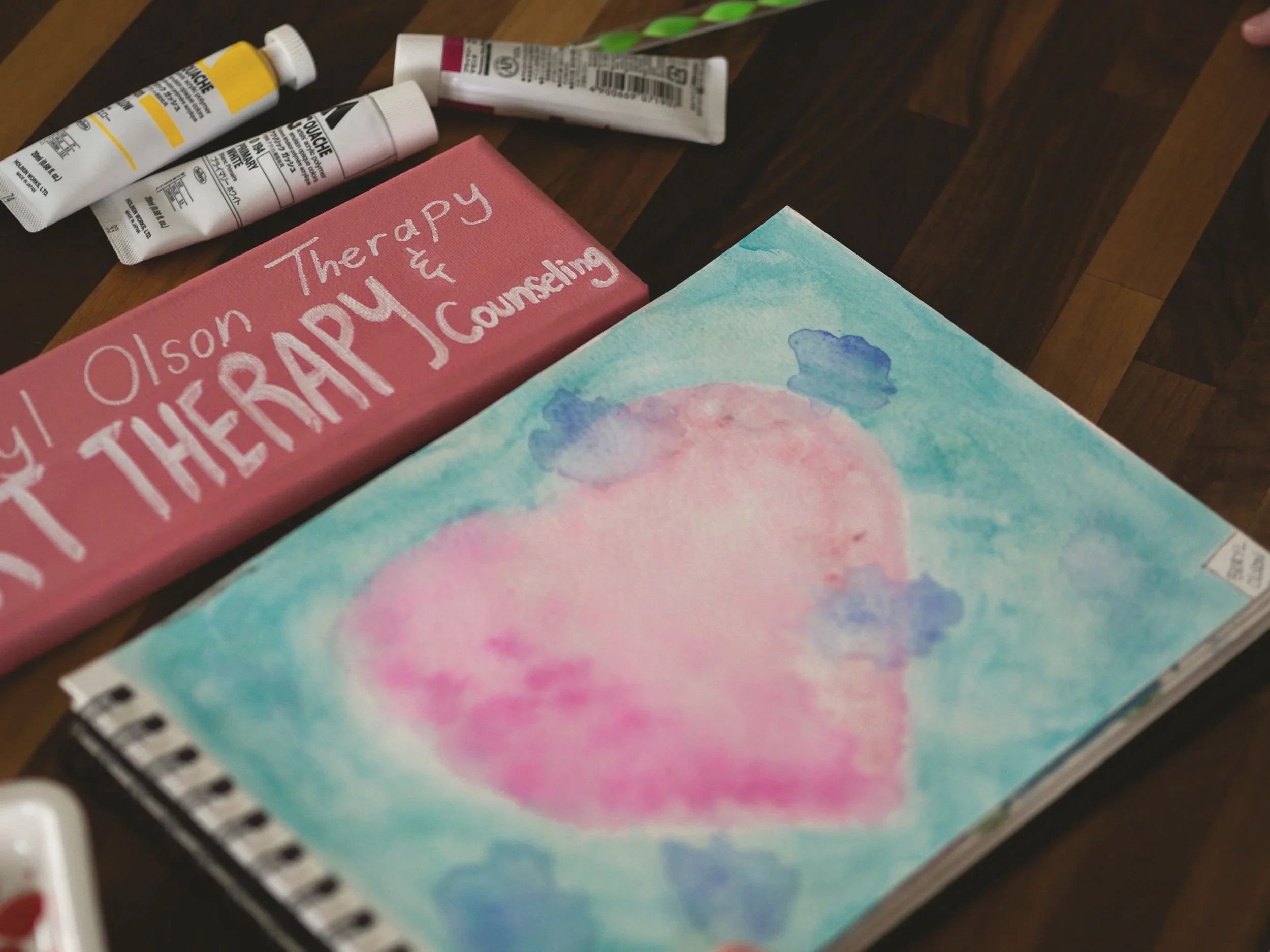
Art therapy is a type of psychotherapy that brings creative expression into the therapeutic process. Instead of relying on words alone, art therapy allows clients to explore alternative means of expression and self-discovery. Artmaking can be used to tap into hard-to-pin-down feelings, release energy, explore personal narratives, practice new skills, and beyond!
You also don’t need to consider yourself an artist to participate. Art therapy is about the experience of creating and what you discover through it—not about making something beautiful or technically impressive.
In art therapy, the possible artistic mediums are endless—painting, collage, drawing, scribbling, creative writing, music, dance, and more! One of the most important rules in art therapy is that there is no wrong way to make art! Regardless of the result, the process of making art has significant therapeutic benefits. Improved emotional regulation, self-awareness, and cognitive function are some of the possible benefits of art therapy. An art therapist can also help you engage in reflection, gaining valuable insights into your emotions, past experiences, relationships, and other aspects of your mental health.
Want to learn more? Here is an article outlining the basics of art therapy.
What Is Art Therapy?
Art therapy combines the creative process with talk therapy. It is facilitated by a trained art therapist who has education in both mental health and therapeutic uses of art.
Sometimes words are exactly what we need. Other times, it can be difficult to explain an emotion, experience, or part of ourselves through conversation alone. Art therapy offers another way to explore what’s happening internally.
That might mean using color and shape to express an emotion, creating a collage about identity, drawing something you don’t yet have words for, or simply noticing what comes up while you make something.
Art and conversation can also work together. You might create for part of a session and spend the rest talking about your experience—or you might decide that you would rather talk that day. Art therapy does not have to mean making art during every session.
What Happens During Art Therapy?
There isn't one right way for an art therapy session to look.
Your therapist might offer a creative prompt related to something you have been exploring together. For example, you might create an image about what anxiety feels like, make a collage exploring different parts of your identity, or experiment with art materials while noticing your emotional and sensory responses.
At other times, you might choose what you want to create or bring an ongoing creative project into therapy.
Afterward, your therapist may invite you to reflect on the experience. What did you notice while you were creating? Did anything surprise you? What parts of the artwork feel important? How does it connect with what is happening in your life?
You are the expert on what your artwork means. Rather than looking at a drawing and telling you what it supposedly reveals about you, I approach artwork with curiosity and explore its meaning alongside you.
Do I Need to Be Artistic?
Not at all!
You don't need any art experience to participate in art therapy, and there is no expectation that your artwork will look a particular way. Stick figures, scribbles, abstract colors, elaborate paintings, collages, digital drawings, and everything in between can all belong.
In fact, worrying about whether something is “good enough” can sometimes become part of the therapeutic process itself. Perfectionism, self-criticism, comparison, and fear of making mistakes often show up on the page in ways that give us something tangible to notice and explore.
And if you're already an artist, your existing creative practice can absolutely be incorporated into therapy too.
Is Art Therapy Just Making Art?
Art can be therapeutic on its own, but making art and participating in art therapy aren't quite the same thing.
You might draw, paint, knit, make music, or color outside of therapy because it helps you relax, express yourself, or process your day. Those experiences can be meaningful and supportive without being art therapy.
In art therapy, the creative process takes place within a therapeutic relationship with a trained mental health professional. Your therapist considers your goals, experiences, needs, and responses to the creative process and helps you explore what emerges.
The artwork isn't simply an activity added onto talk therapy. It can become another way for us to communicate, reflect, experiment, and understand your experiences together.
Can Art Therapy Be Done Online?
Yes! Art therapy can work well through telehealth, and you don’t need a full art studio or expensive supplies to participate.
During online art therapy sessions, you can create using whatever materials you already have at home—such as paper, pencils, markers, paint, collage materials, or other supplies that feel comfortable and accessible to you.
If you prefer creating digitally, I also offer access to a secure digital art therapy platform at no additional cost. This allows us to create and explore artwork together online without requiring you to purchase art supplies.
Telehealth art therapy can also give you more choice over your creative environment. You can work with familiar materials, create from the comfort of your own space, and adapt the process to your sensory, physical, and creative needs.
What Can Art Therapy Help With?
People come to art therapy for many of the same reasons they seek other forms of counseling. You don't need to have a particular diagnosis or problem to benefit from incorporating creativity into therapy.
Art therapy may offer another way to explore experiences related to:
Anxiety and emotional overwhelm
Stress and burnout
Perfectionism and self-criticism
Identity and self-exploration
Life transitions
Grief and loss
Relationships and boundaries
Trauma and difficult experiences
Neurodivergence
LGBTQIA+ identity and experiences
Difficulty identifying or communicating emotions
For some people, art provides a way to approach experiences that feel difficult to put into words. For others, creating makes therapy feel more engaging, concrete, playful, or accessible.
The role art plays in therapy can also change over time. Some sessions might involve a lot of art-making, while others may look more like traditional talk therapy.
How Is an Art Therapist Different From an Art Teacher?
Art teachers and art therapists can both encourage creativity, but they have different roles and training.
An art teacher typically focuses on developing artistic knowledge and skills, such as learning techniques, working with particular materials, or understanding elements of art and design.
An art therapist is a mental health professional who has specialized training in psychotherapy, human development, mental health, and the therapeutic use of art and creative processes.
In art therapy, there isn't a grade, and I'm not evaluating how successfully you used a particular technique. We might instead be curious about what creating was like for you, what you noticed, and how the experience relates to the things you're working on in therapy.
What Credentials Does an Art Therapist Have?
Art therapy is a specialized mental health profession. Art therapists complete graduate-level education that includes training in psychotherapy as well as art therapy theory and practice.
You may see credentials such as ATR (Registered Art Therapist) or ATR-BC (Board Certified Art Therapist) after an art therapist's name. These credentials are administered by the Art Therapy Credentials Board.
Licensing works somewhat differently because mental health licensing requirements vary by state. An art therapist may also be licensed—or working toward licensure—as a counselor, marriage and family therapist, social worker, or another type of mental health professional.
When looking for an art therapist, it's completely appropriate to ask about their education, art therapy training, professional credentials, state license, and experience working with concerns that are important to you.
How Do I Find an Art Therapist in Washington?
If you're looking for an art therapist in Washington State, start by considering what you're hoping for from therapy. Art therapists have different specialties, approaches, identities, and areas of experience, just like other therapists.
You might want to ask:
Does this therapist work with the concerns I want to address?
Do they offer telehealth, in-person therapy, or both?
Are they licensed to provide therapy where I live?
What art therapy education and training do they have?
Do I need to provide my own art supplies?
Does their approach to therapy feel compatible with what I'm looking for?
Do they understand identities or experiences that are important to me?
If you're specifically looking for neurodivergent-affirming or LGBTQIA+-affirming care, it can also be helpful to look beyond whether a therapist simply lists those populations on their website. Read how they describe their approach and consider asking what affirming care actually looks like in their practice.
I provide telehealth art therapy and counseling for clients throughout Washington State, with a particular focus on LGBTQIA+ and neurodivergent-affirming care. My approach is collaborative, creative, and flexible: art can be central to our work, something we use occasionally, or something we don't use at all on a particular day.
If you're curious about whether art therapy might be a good fit for you, I offer free 15-minute consultations so we can talk about what you're looking for and answer any questions you have before getting started.
Learn more about explore Art Therapy, how Art Therapy can help neurodivergent clients, or contact me to schedule a free consultation.
About Beryl Olson
Beryl Olson, LMHCA, ATR-P, is an art therapist and mental health counselor based in Olympia, Washington. She provides LGBTQIA+ and neurodivergent-affirming therapy via telehealth throughout Washington State.